Published on
Writing is more than words on a page. It’s how we share ideas, make discoveries and connect with others. Now in its second year, Week of Writing (WOW), held Oct. 19–23, celebrated writing across campus by bringing together students, faculty and staff to build community, spark ideas and support writers at every stage of the writing process, from drafting and revising to publishing a final product. Throughout the week, numerous events offered opportunities to share ideas, strengthen writing skills and celebrate the many ways writing connects the Mizzou community. View the full schedule here.
Throughout the week, 21 events were held, 12 campus offices supported the events and a total of 440 people attended the W.O.W. events.
Thank you to everyone who attended this year and the 2026 co-sponsors: Campus Writing Program, Center for the Humanities, Creative Writing Program, English Department, Faculty Success & Leadership Council, Mizzou Libraries, Office of the Provost, Theater Department and the Teaching for Learning Center.
Monday’s events:
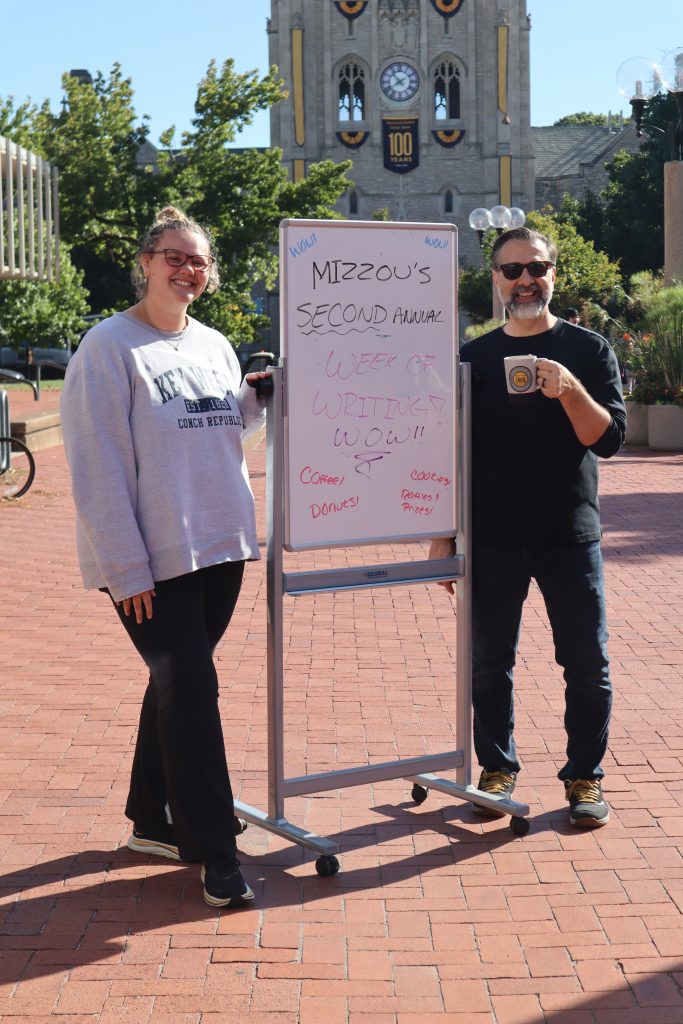
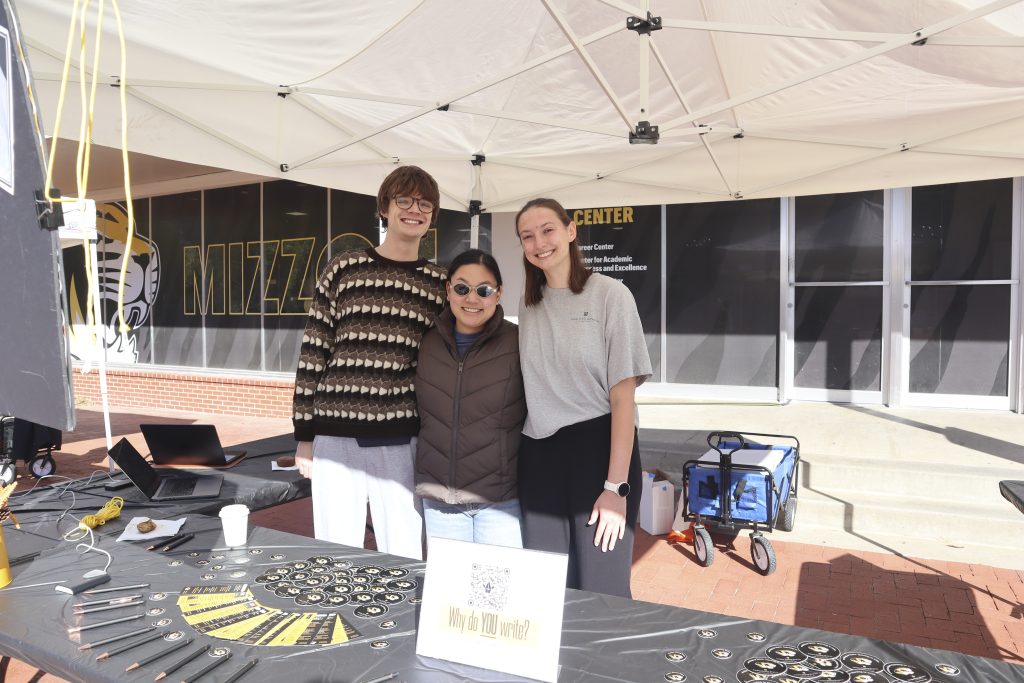
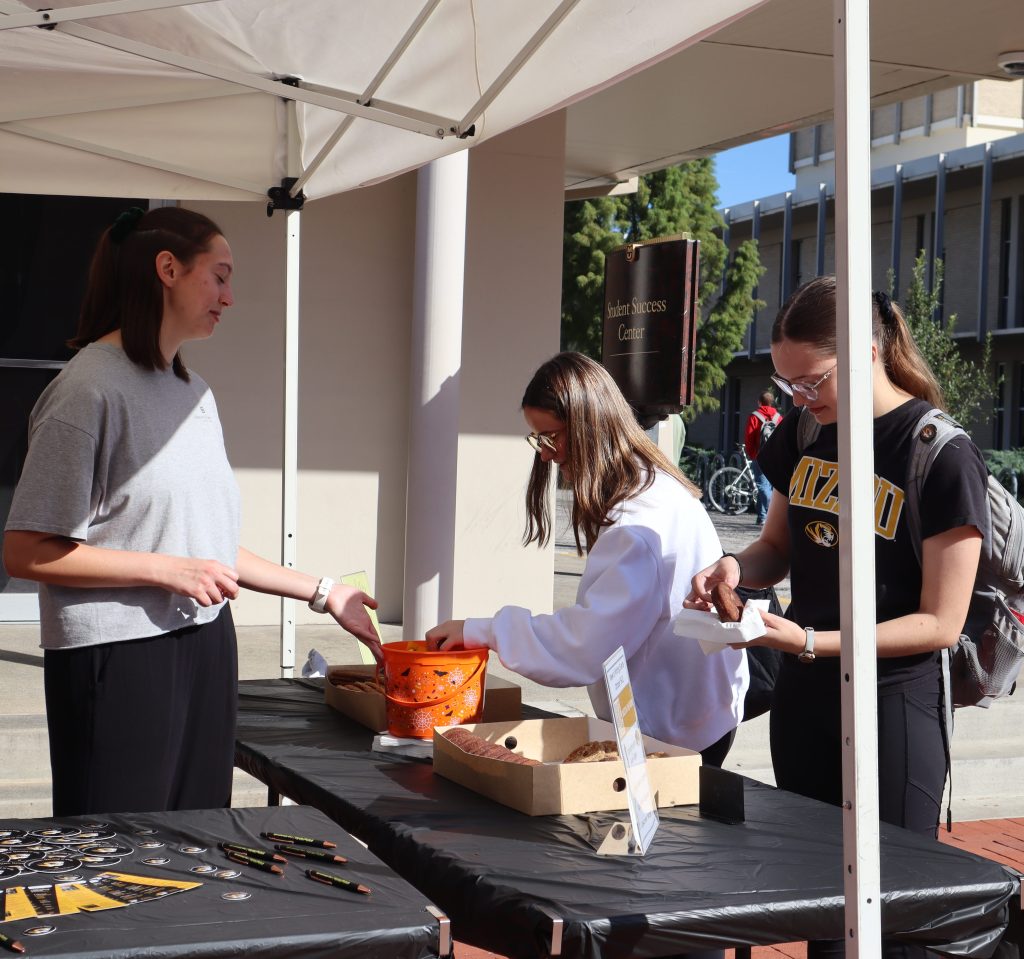
Week of Writing Kickoff Celebration
WOW week kicked off by celebrating the national Day on Writing with the Campus Writing Program, the Writing Center and the Counseling Center. Writers could stop by Lowry Mall, grab some coffee, hot chocolate and an apple cider donut and share why they love to write.
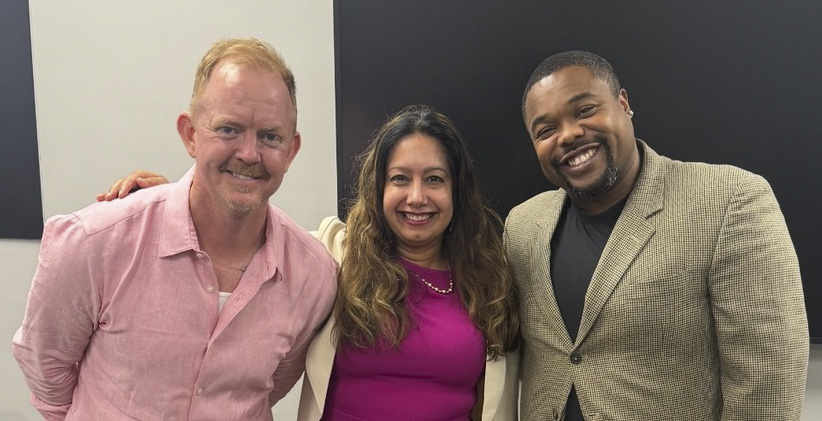
Revealing Research Workshop: Translating Your Scholarly Work Beyond the Academy
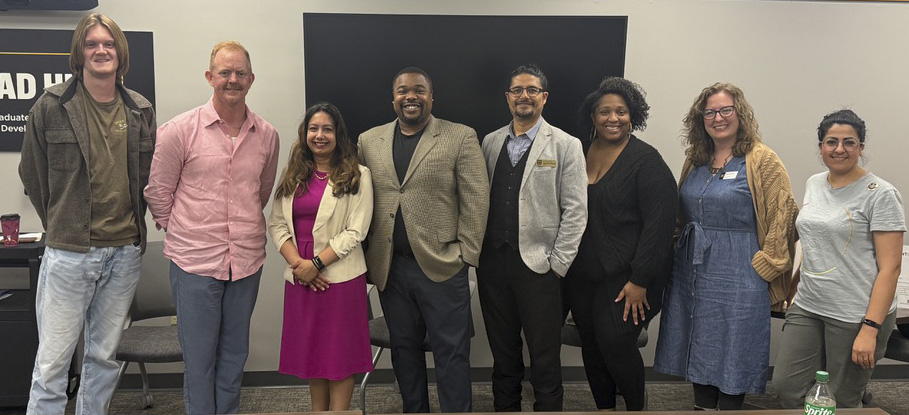
Faculty members Michael Williams and Dennis Crouch shared how to transform your scholarly work for a public audience as well as tips and tricks for communicating research beyond the academy. Up to ten attendees can be provided with a license to post a research talk on MU’s new CASSYNI platform.
Tuesday’s events:
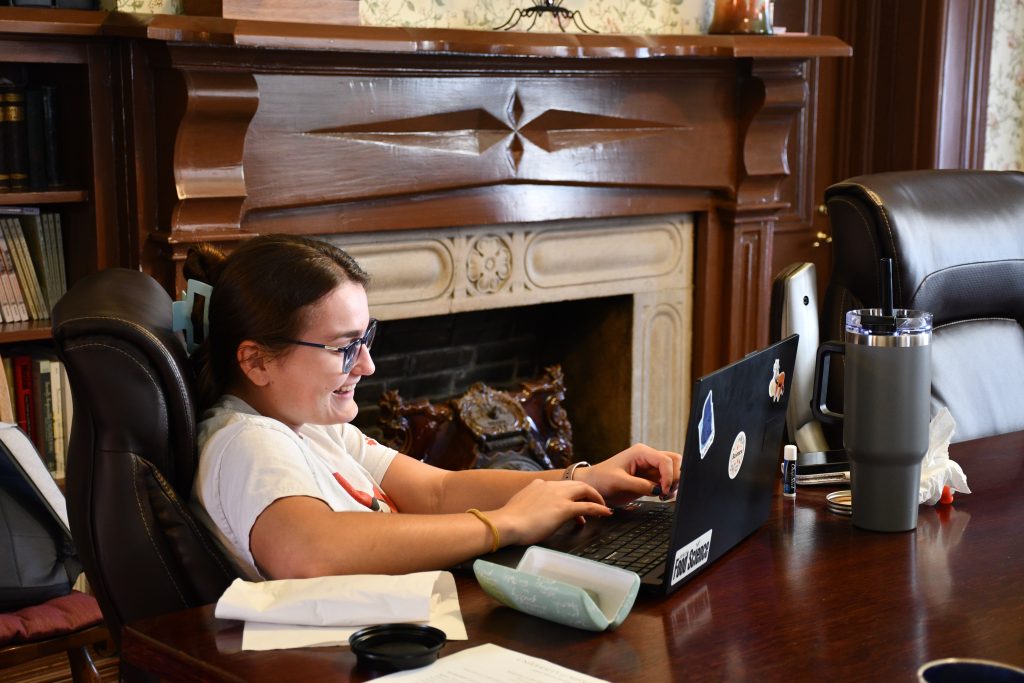
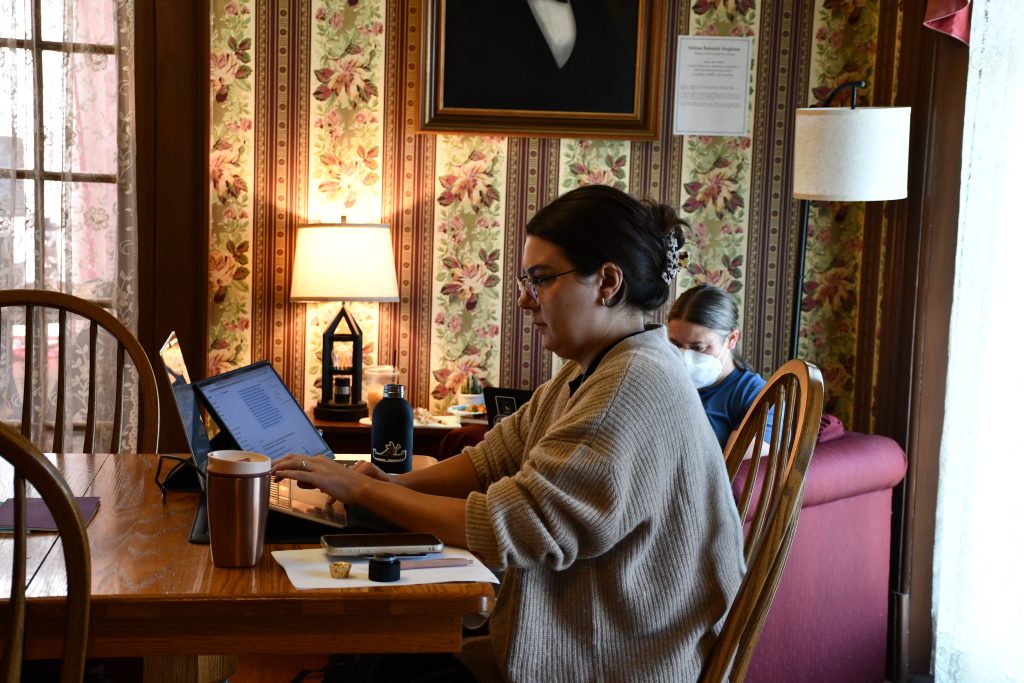
Graduate Student Writing Retreat
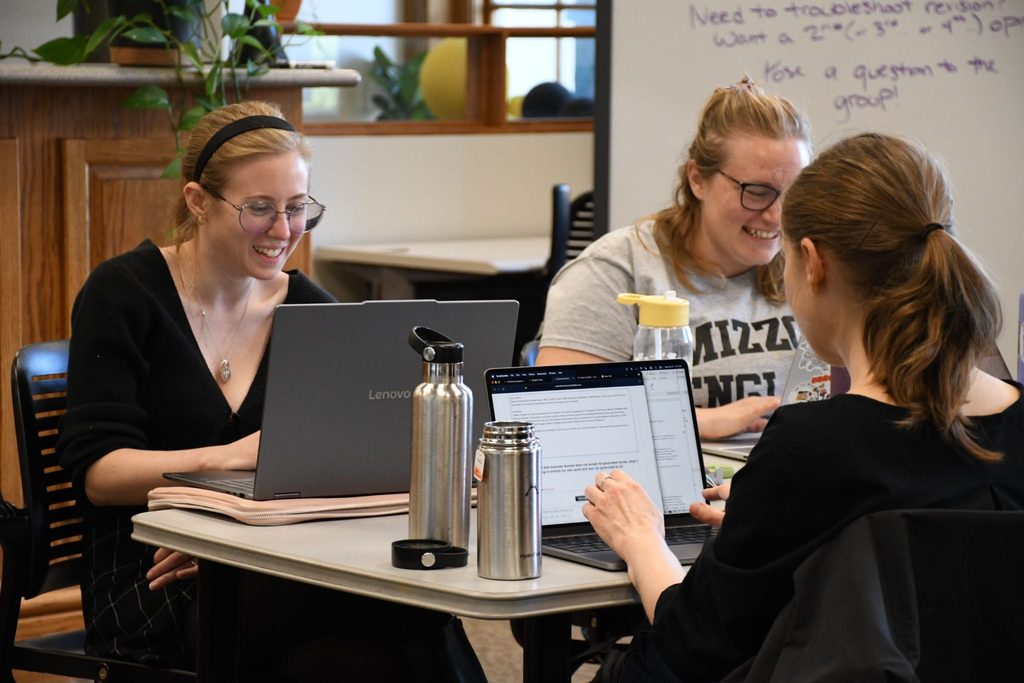
Graduate students were invited to spend a dedicated day focused on writing at the historic Conley House during a writing retreat hosted by the Campus Writing Program, the Writing Center and the Graduate School. The retreat provided students with dedicated time and space to make progress on their writing projects, focus on their academic goals and connect with a community of fellow graduate writers. Lunch was provided for all registrants, helping create a welcoming environment for a productive day of writing and collaboration.
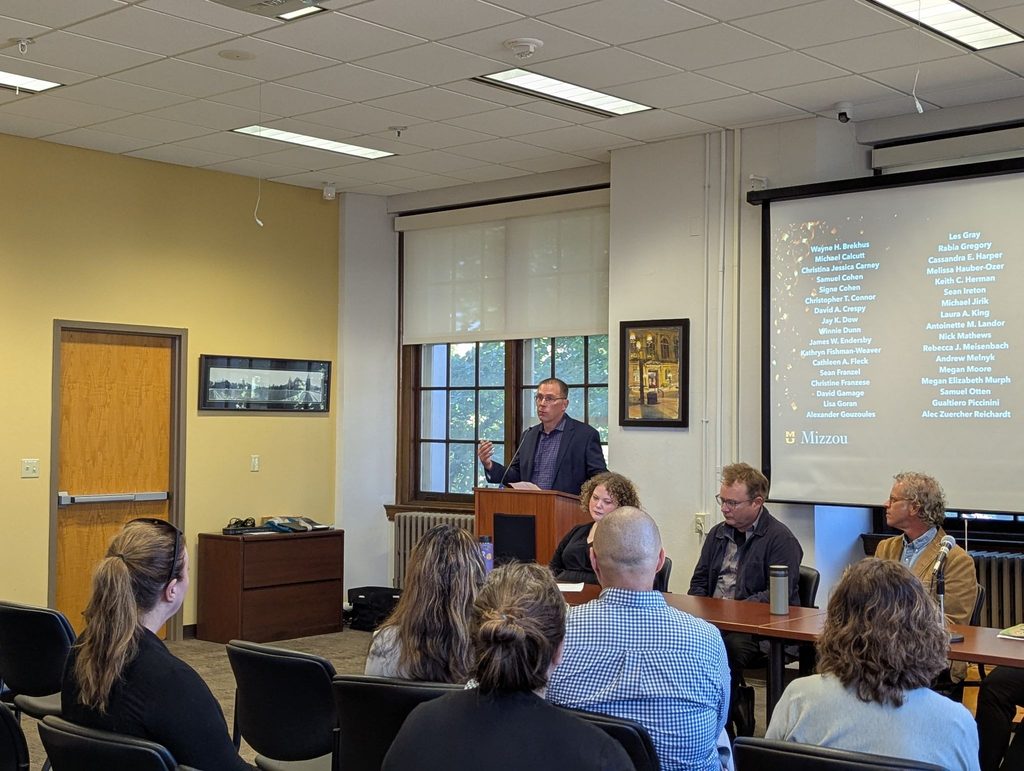
Faculty Book Panel and Reception
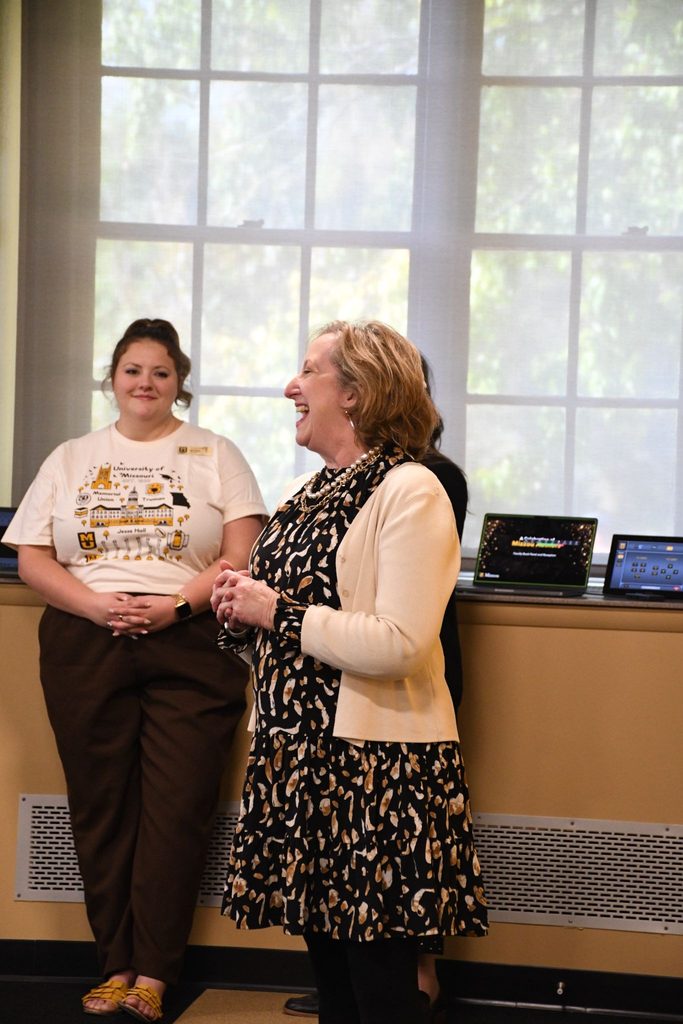
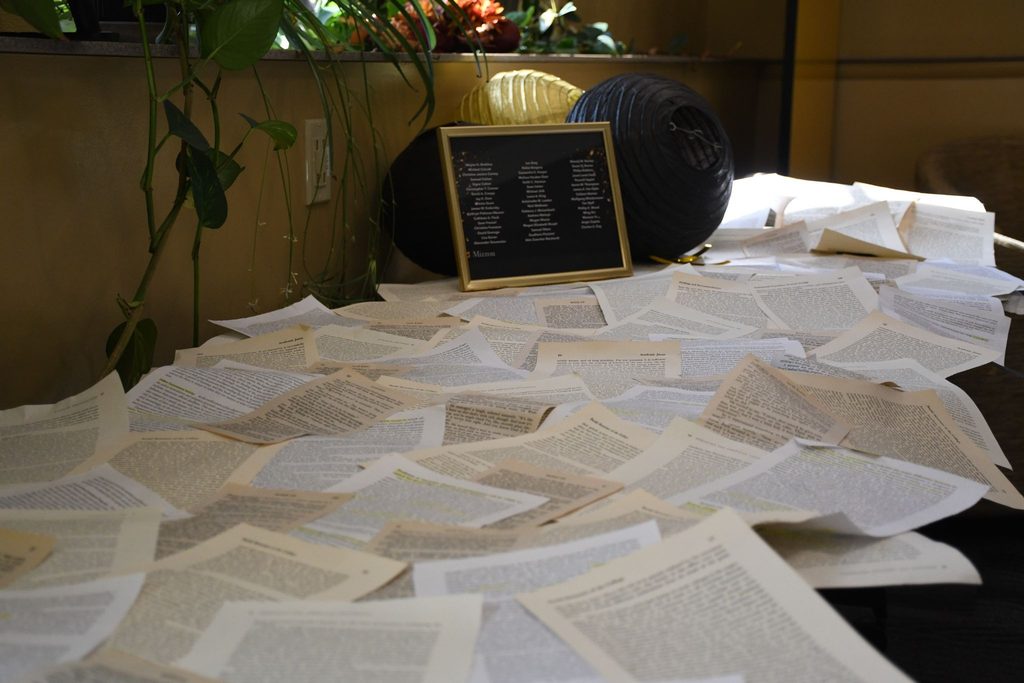
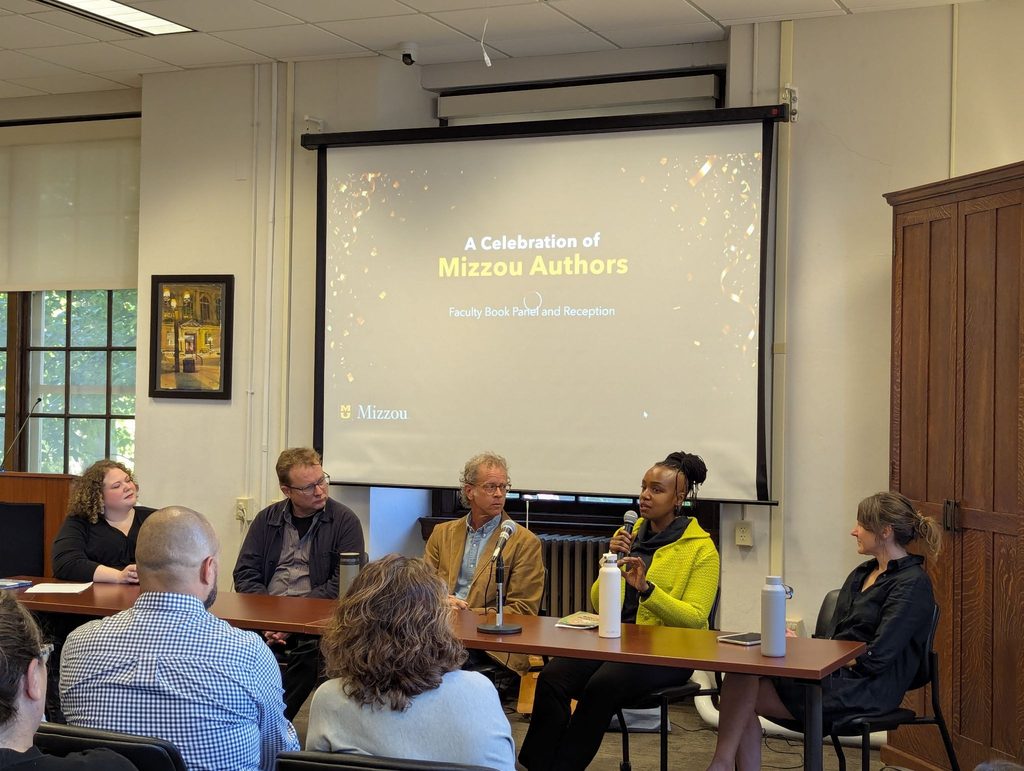
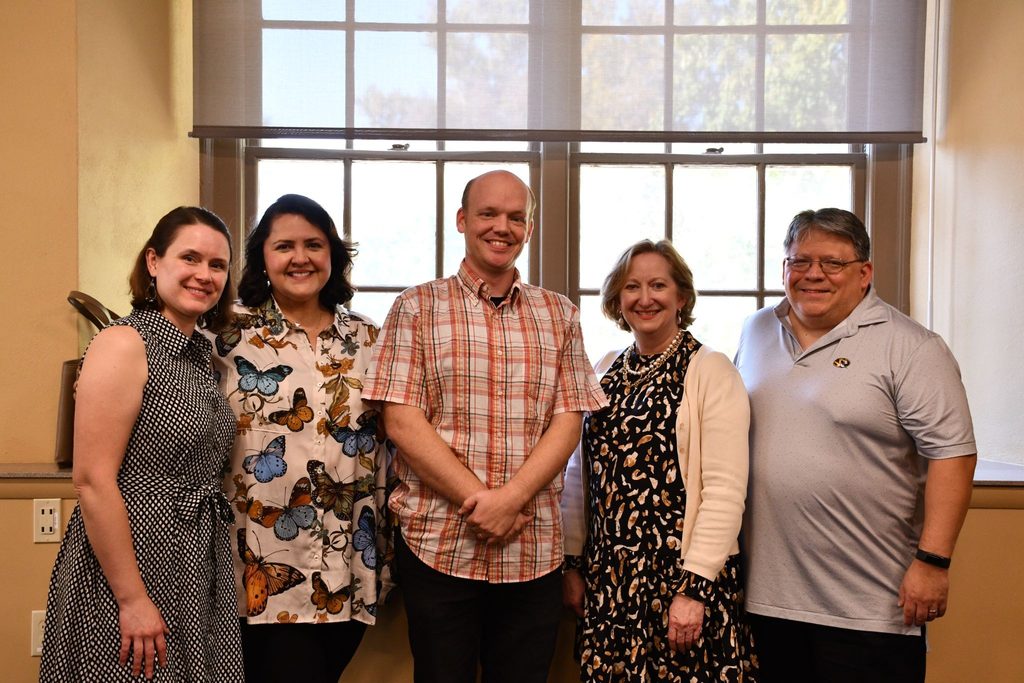
Recent faculty authors were recognized and celebrated for their academic achievements. The event began with an engaging panel discussion lead by Megan Murph highlighting their accomplishments, research and creative work. Christina Carney, Samuel Cohen, Sean Franzel and Megan Moore shared insights into their writing processes, discussed the inspiration behind their publications and reflected on their experiences bringing their work to life. The event concluded with a reception at the Teaching for Learning Center (T4LC) in Ellis Library, giving attendees an opportunity to connect with the authors and celebrate their achievements.
Finding Your Writing Community: A Conversation with the Columbia Chapter of the Missouri Writers Guild
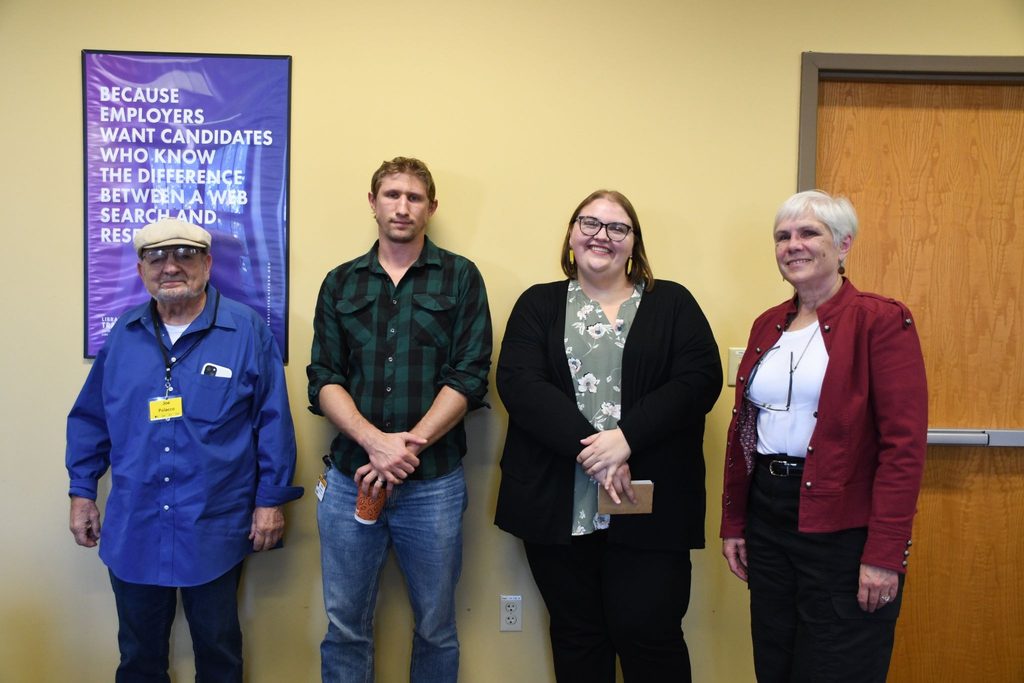
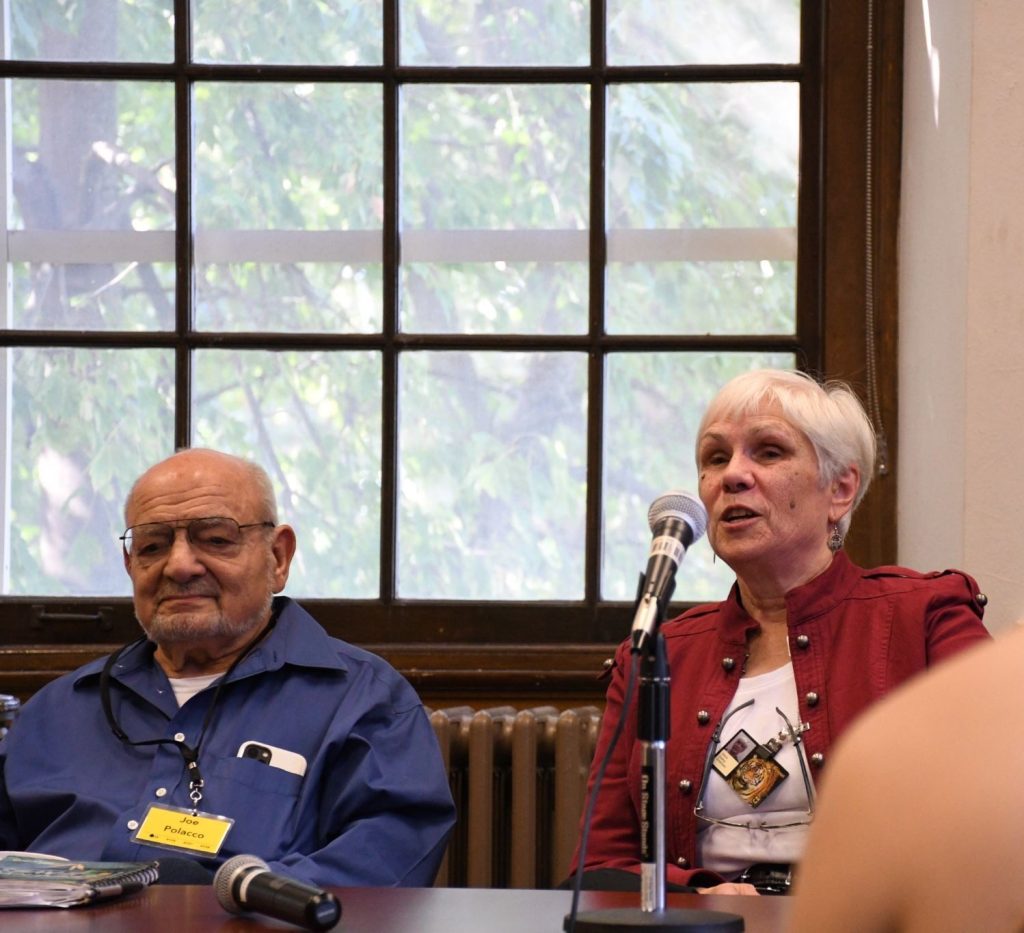
Members of the Columbia Chapter of the Missouri Writers Guild explored the importance of writing communities and the often-unseen support behind the writing process. Presenters Bethany Spitzmiller, Eilene Ording, Joseph Polacco and Samuel Daugherty shared their experiences building writing networks, navigating feedback and supporting fellow writers. Through an interactive conversation, participants reflected on how to find meaningful connections, strengthen their writing practice and make the writing process less solitary.
Deconstructing the Draft: Dynamic Approaches to Writing and Revision
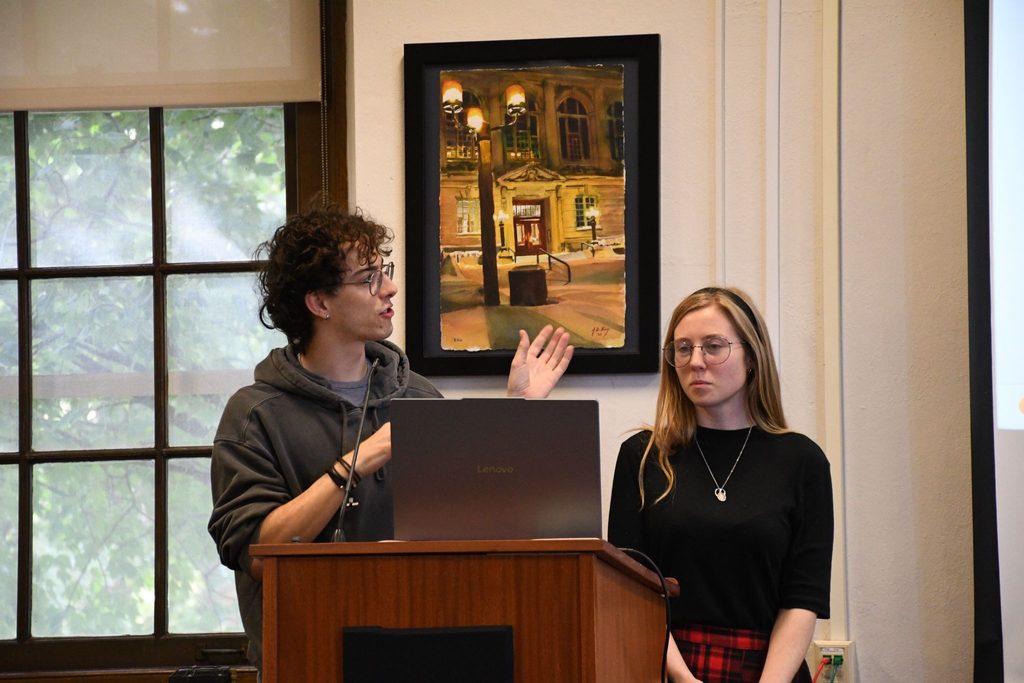
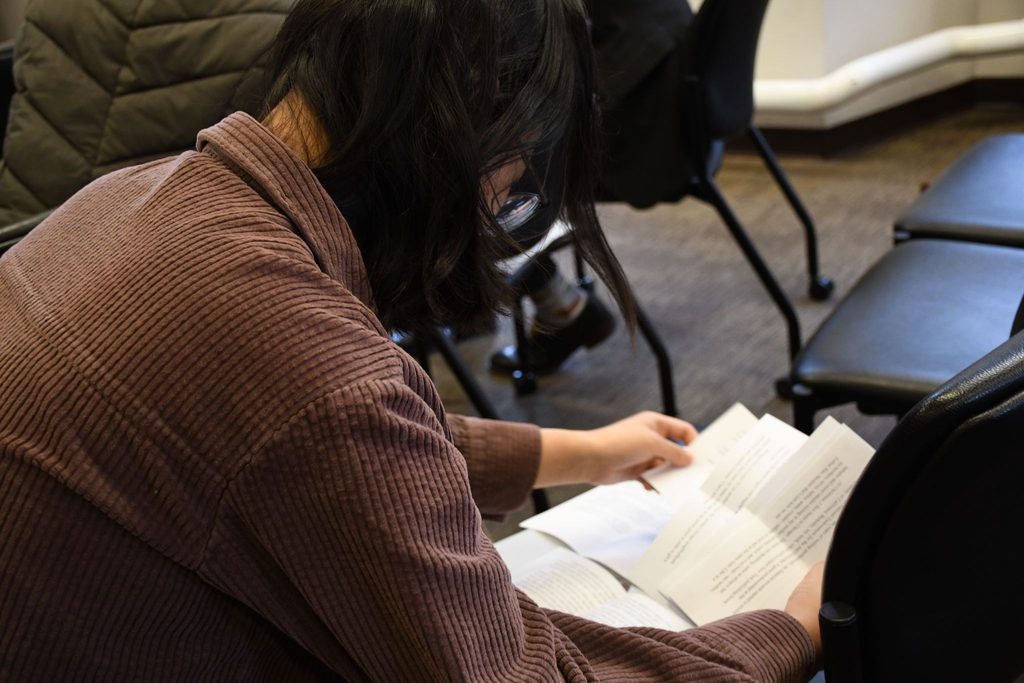
Graduate students Emily Clemente and Will Lanstone demonstrated how non-linear the writing and editing process can be with exercises they use with their students. Through practical examples focused on organization, structure, style and word choice, presenters highlighted how drafting, revision and feedback can strengthen critical thinking and help students move beyond formulaic writing. In one exercise, texts are taken apart and reconstructed like a puzzle so students think through transitions and order within storytelling.
Wednesday’s events:
Writing Journeys: A Reflective Practice (Zoom)
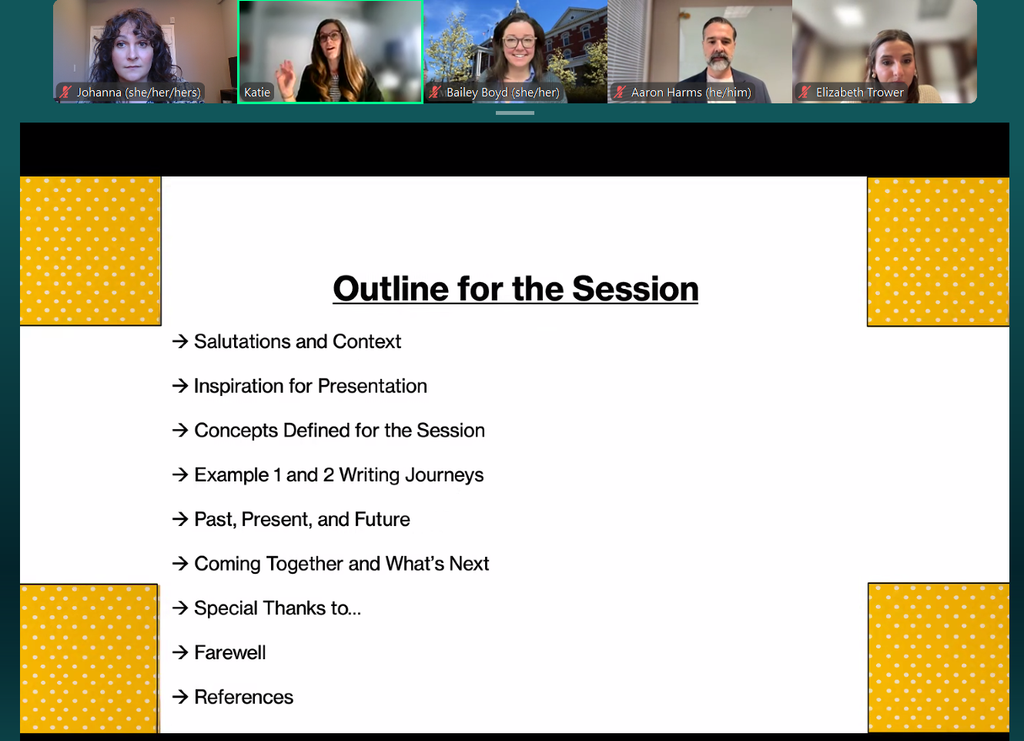
Katie Austin hosted a roundtable discussion inviting graduating seniors and graduate students to reflect on their writing journeys, evolving writer identities and future goals. Participants shared insights about what they have learned about writing and how those experiences will shape their academic, professional and personal futures, while connecting with fellow writers across disciplines.
Writing while learning, teaching while writing: between languages, between roles
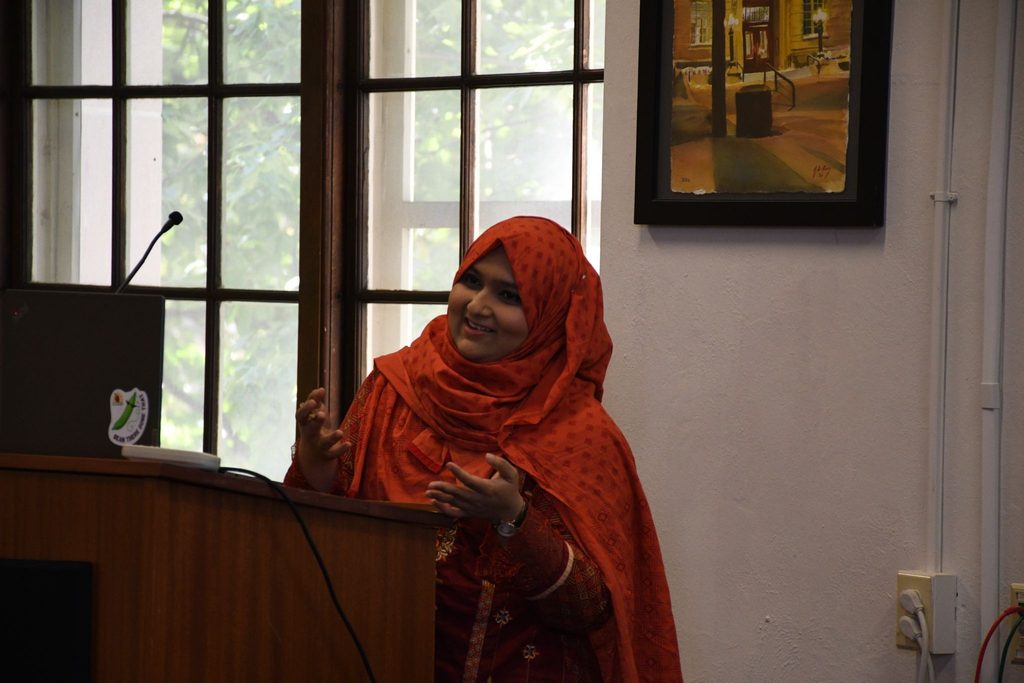
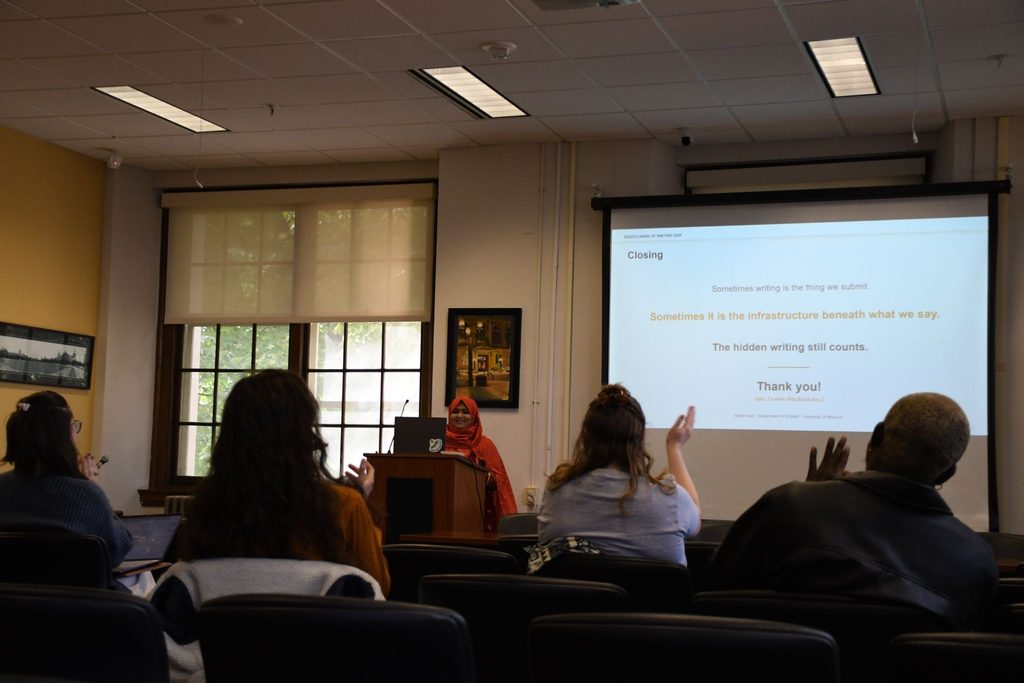
Barja Islam explored the often-overlooked writing that supports teaching, speaking and thinking, drawing on experiences as both a graduate student and first-year writing instructor. The presentation highlighted how notes, discussion questions, revisions and preparation shape communication, encouraging attendees to recognize writing as an ongoing process that extends beyond the finished page.
Submission Soiree: A creative writing program event:
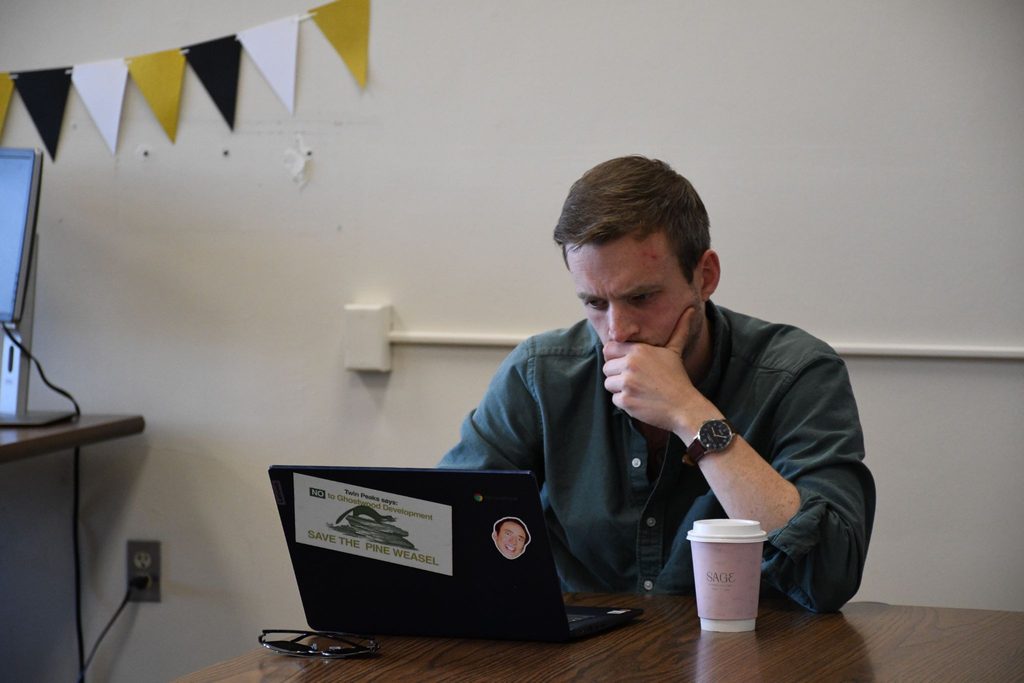
Graduate students gathered at the Writing & Research Hub for a hands-on submission workshop facilitated by Creative Writing PhD candidate Kayla Cayasso. Participants worked on submitting their poems, essays and stories for publication, with the Creative Writing Program sponsoring submission fees for up to 12 students. Coffee, tea and snacks helped create a welcoming space for writers to share their work and take the next step toward publication.
From Professional to Professor: Building your bridge into academia
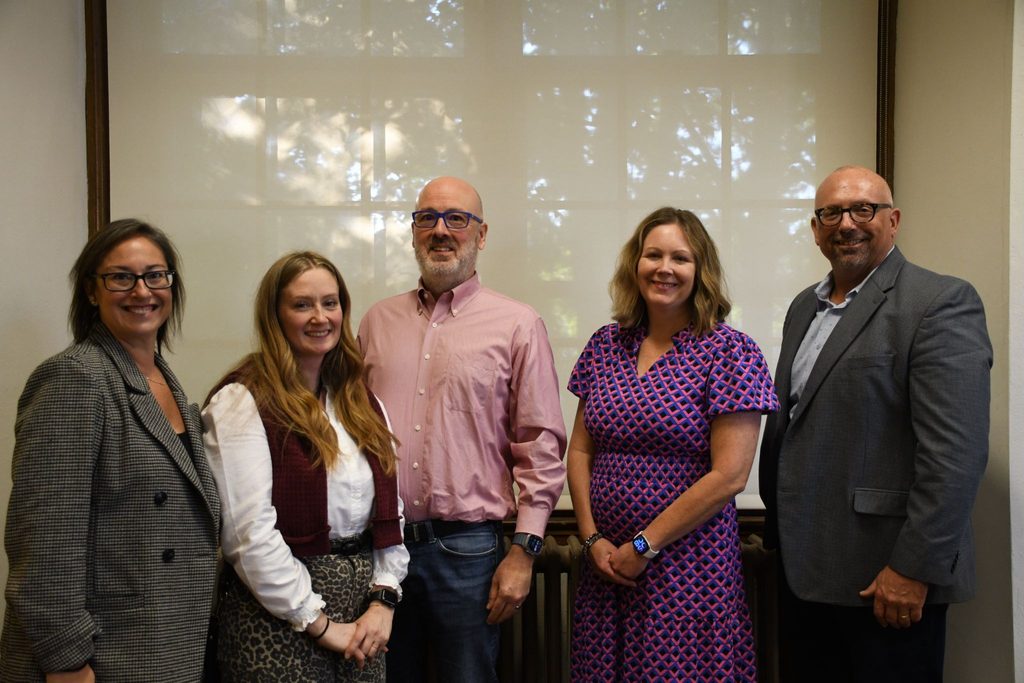
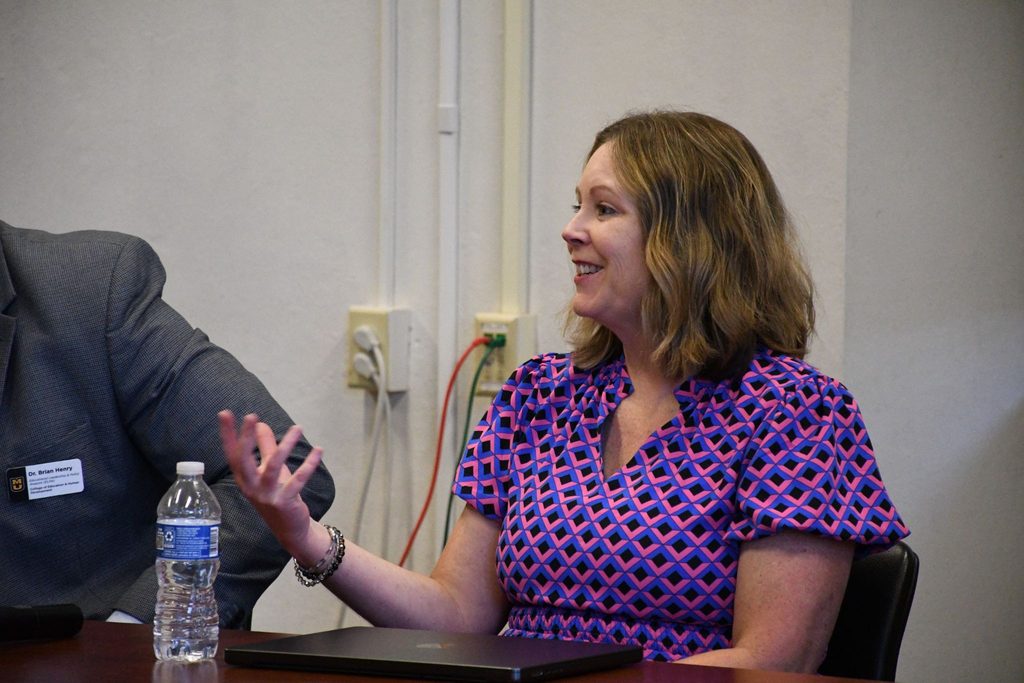
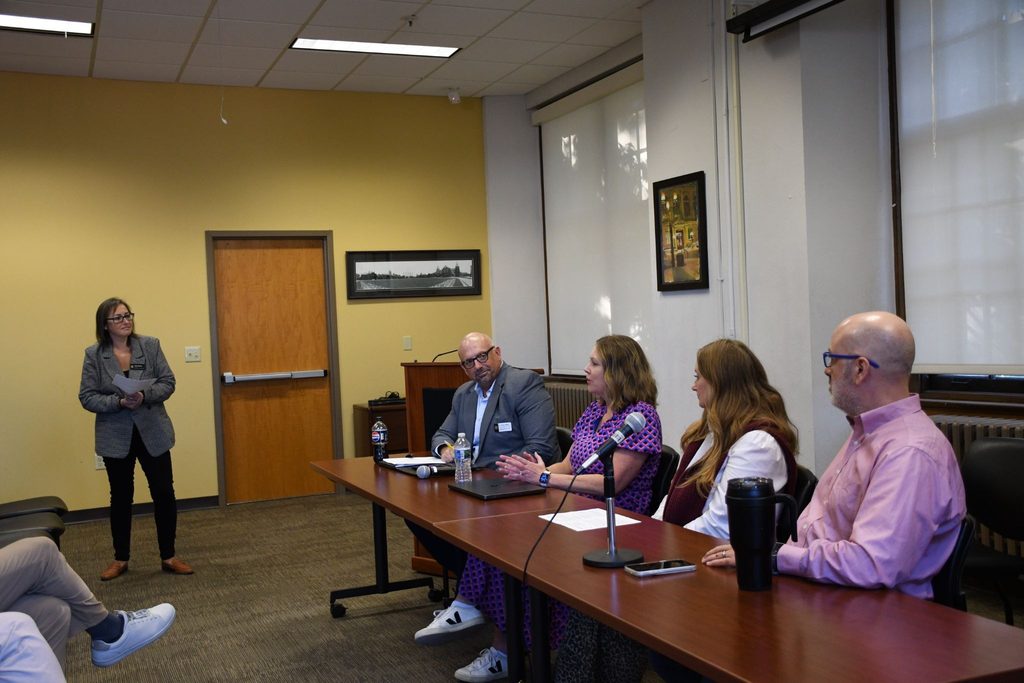
Moderated by Amy Simons of the Missouri School of Journalism, this panel brought together faculty from across Mizzou to discuss the transition from professional practice to higher education. Panelists Elizabeth Frogge (School of Journalism), Sean Goggins (College of Engineering), Brian Henry (College of Education & Human Development) and Chelseá R. Mitchell (School of Law) shared practical insights on balancing teaching with industry engagement, developing a teaching philosophy, navigating academic feedback and building mentorship and community to support a successful faculty career.
Thursday’s events:
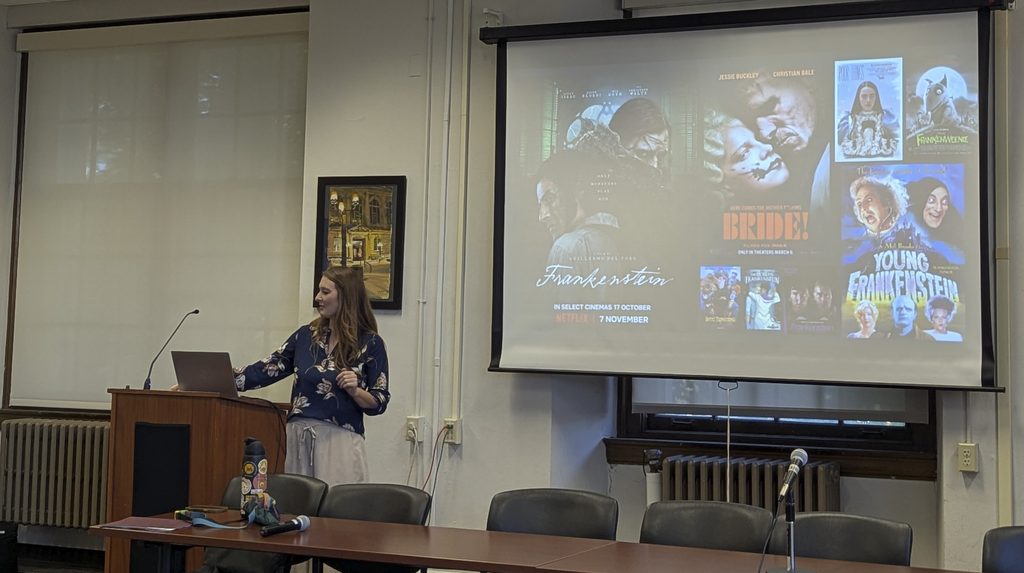
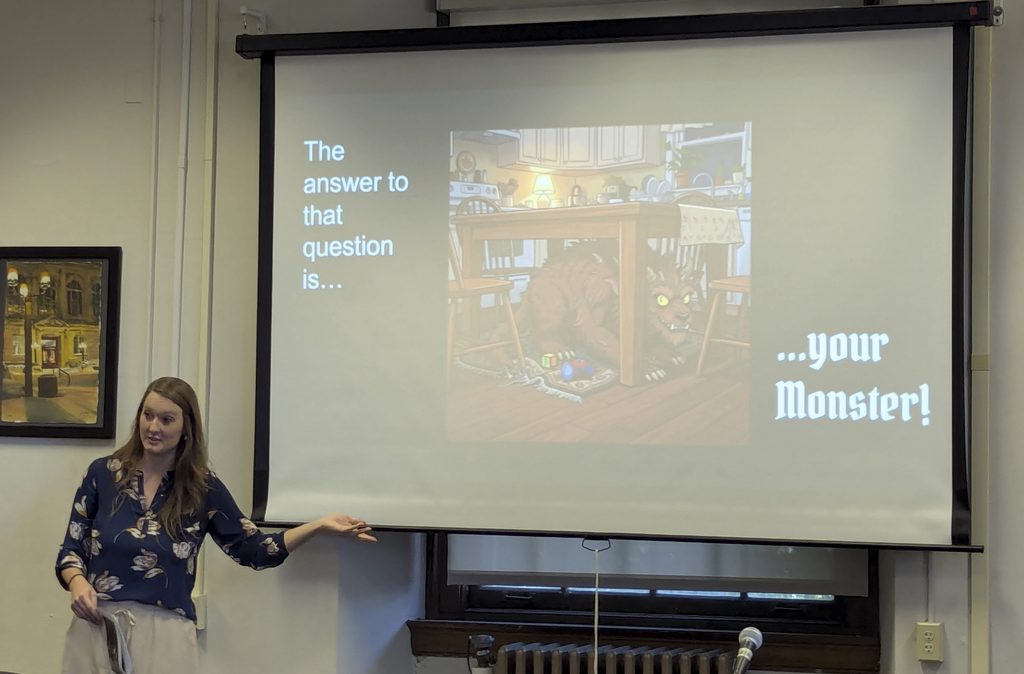
What’s Hiding UNDERNEATH the Table: The Monsters Writers Create
Olivia Latendresse talked about the different types of fears that hold us back as writers–second guessing ourselves, feeling imposter syndrome. These appear in the form of monsters that may affect our writing and hold us back. Instead, she invites us to view the monsters with curiosity and compassion rather than rejecting or defeating them. Mary Shelley’s Frankenstein is an example of a monster who was a misunderstood and imperfect creation.
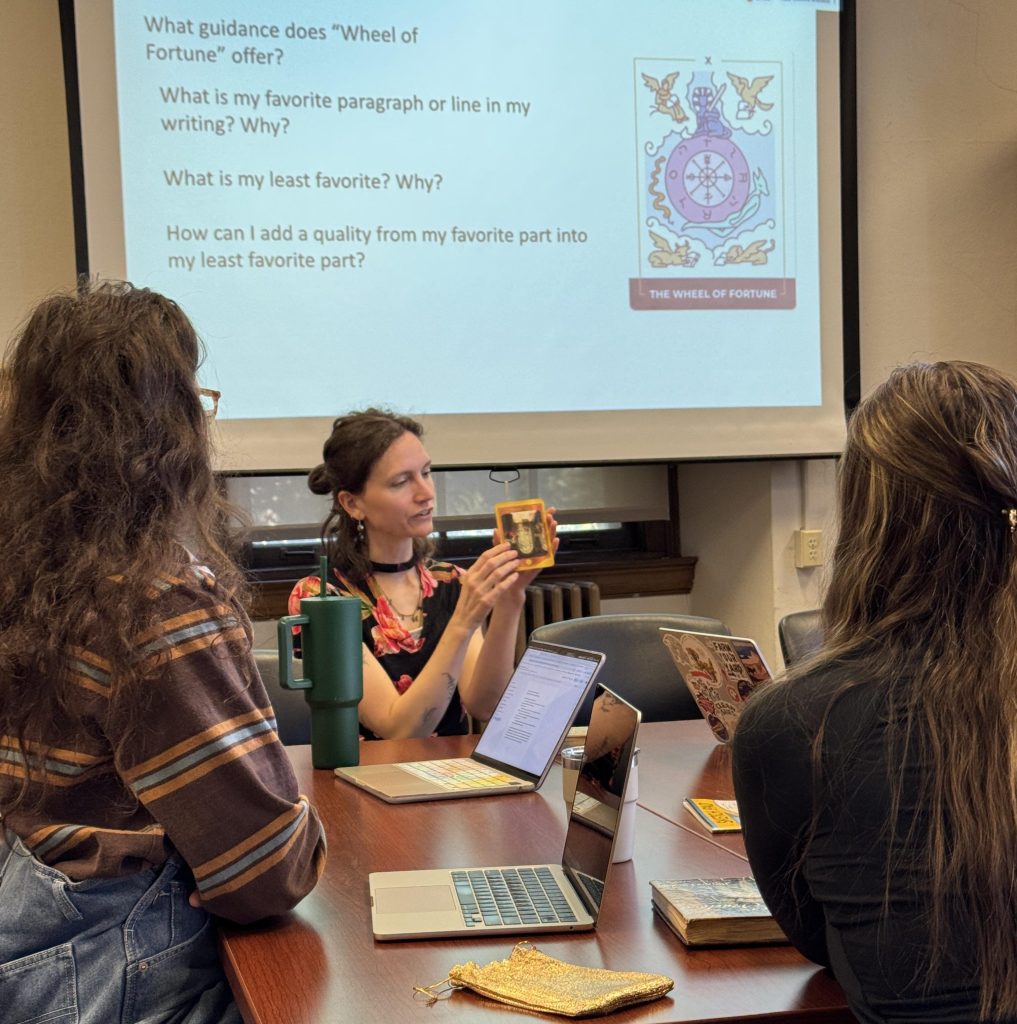
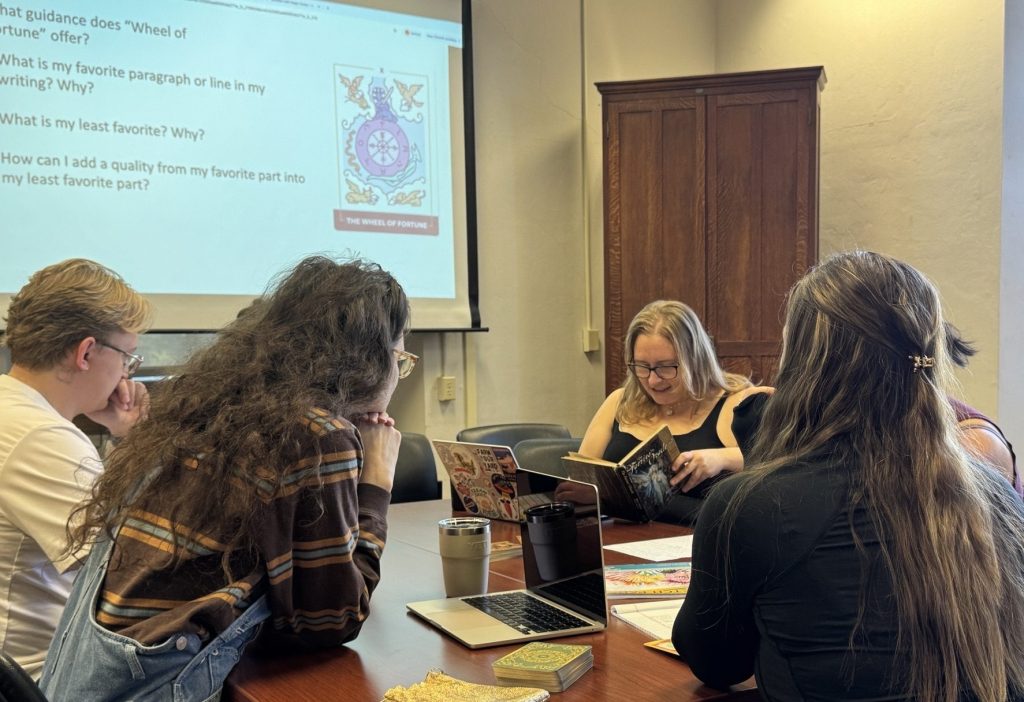
Creative Revision-ing: Divination & Scrying Practices for Revising our Writing
Julia Kooi Talen talked about the role of disruption in the writing process and what characteristics of objects and plants can be applied to revision. Participants drew tarot cards to examine how the hidden meaning of the cards may inform their approach to writing.
Special Collections Event with Dr. Emily Friedman
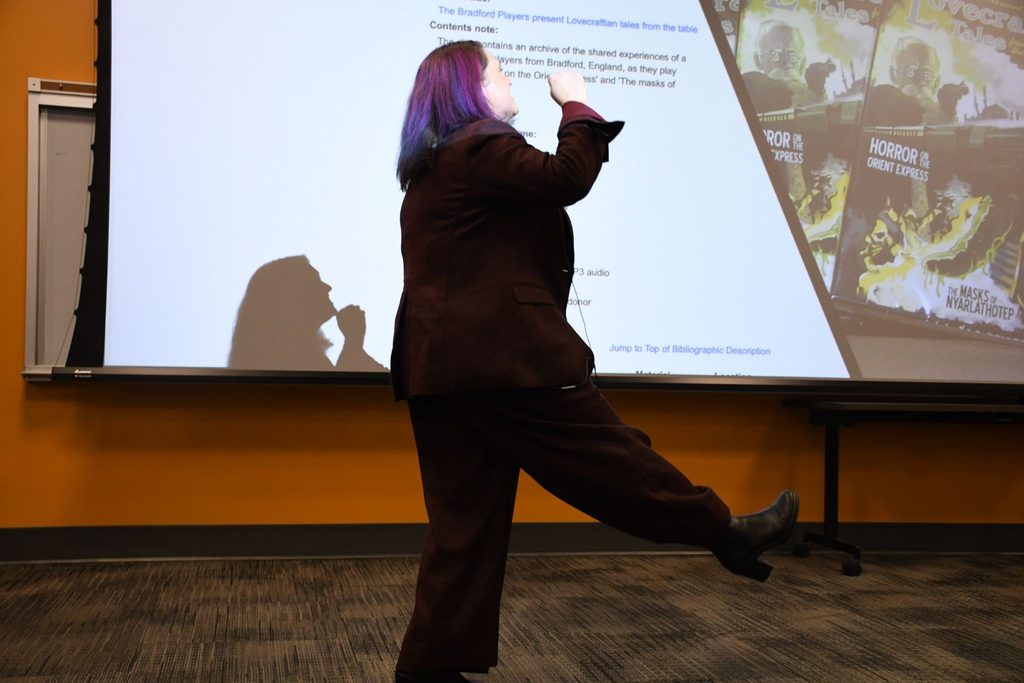
A variety of graphic novels, instruction manuals, workbooks, and interactive objects were brought out of Special Collections for participants to examine. Participants moved around the room to explore the relationship between historical and modern objects, such as a Bronte manuscript and a modern graphic novel called Die.
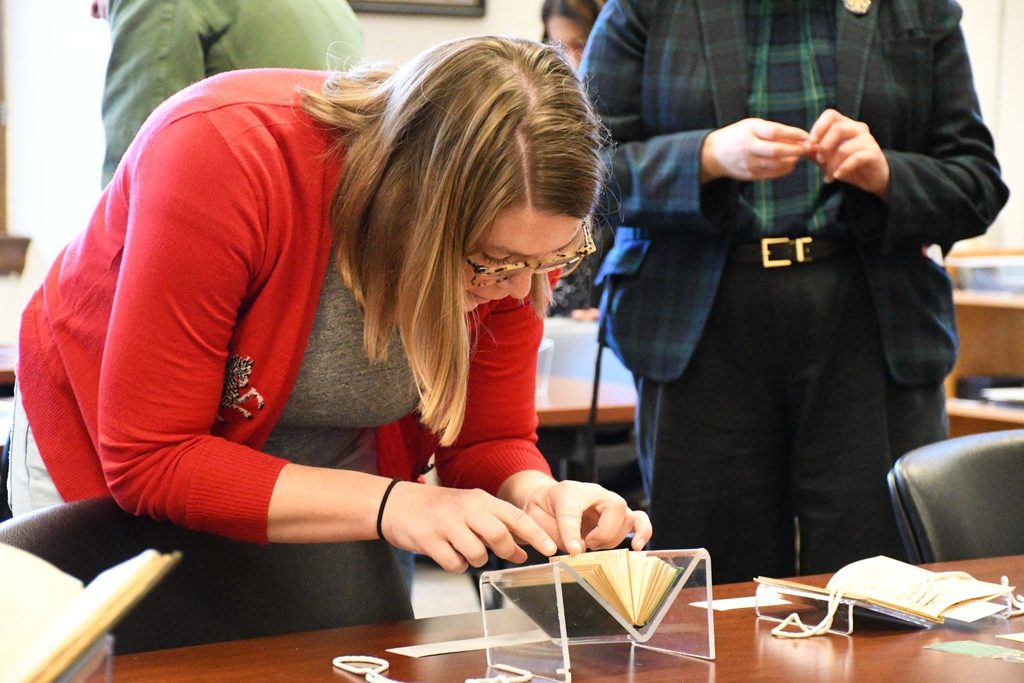
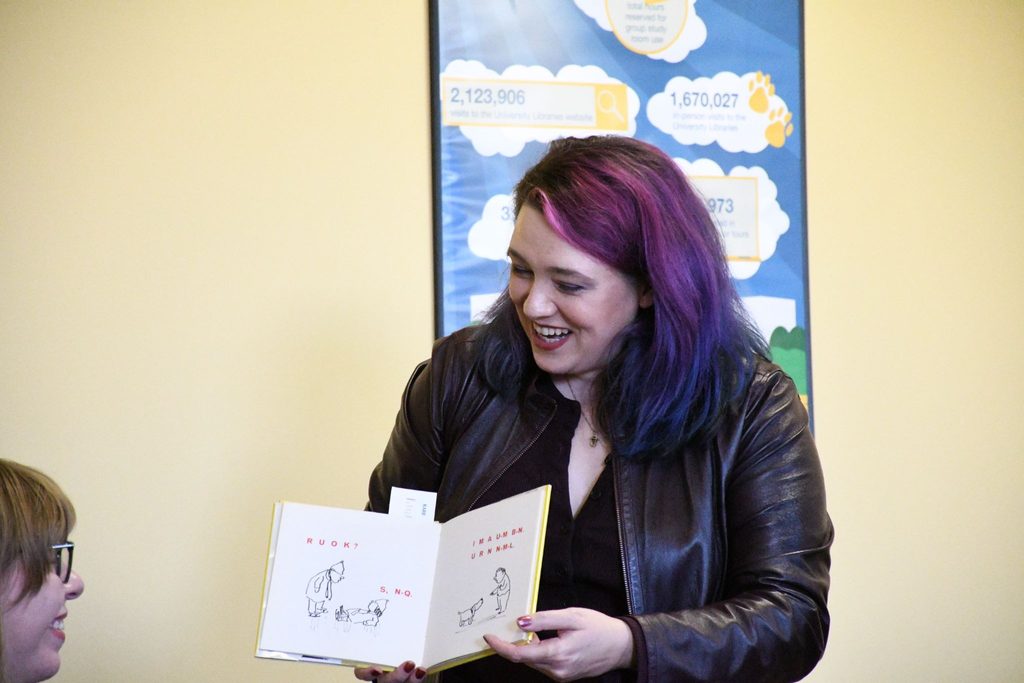
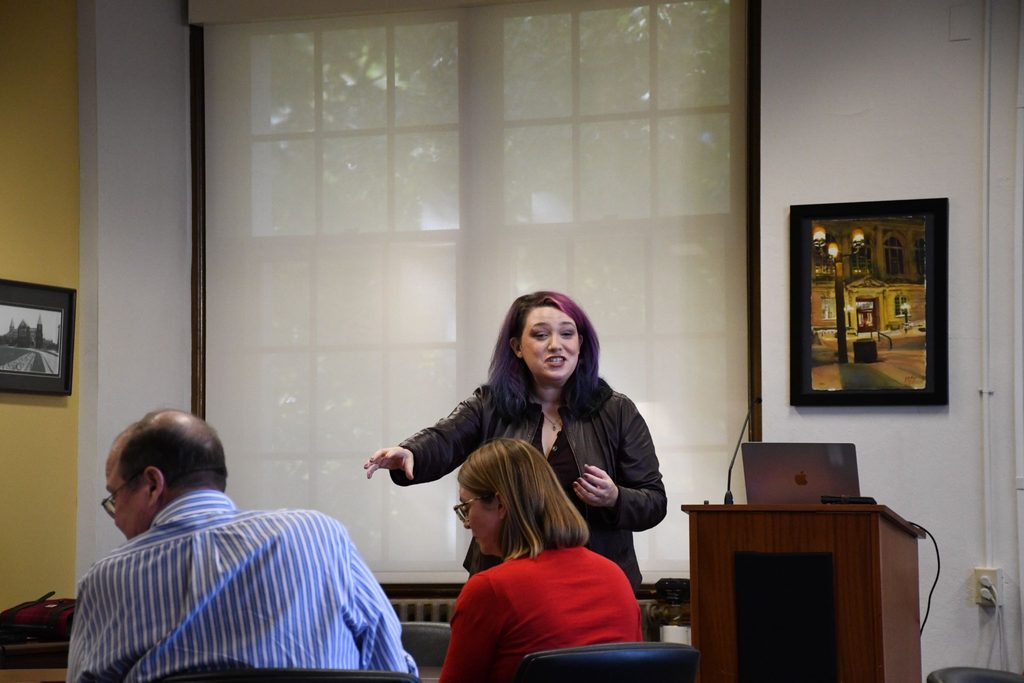
Table Top Role Playing Game Jam
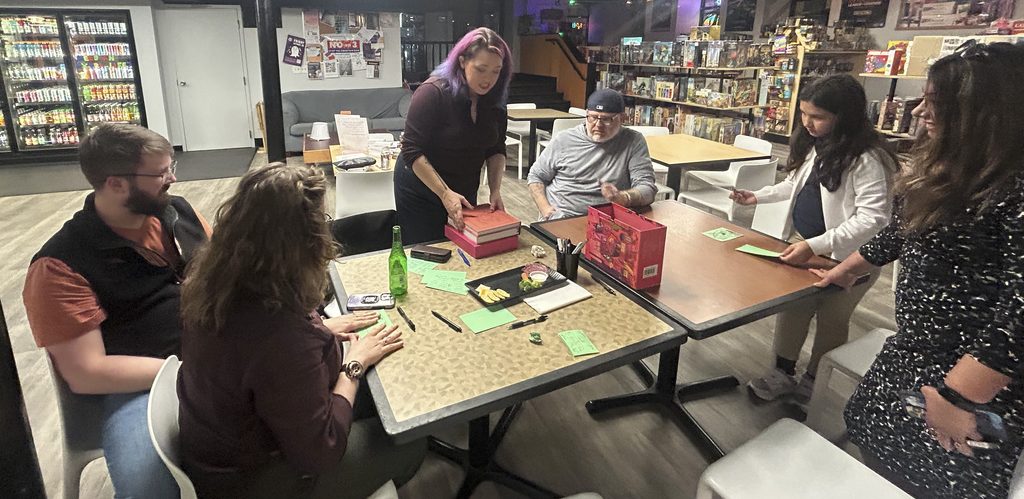
Hexagon Alley hosted us for a ‘game testing’ game jam where you can encounter ‘easy to learn, fun to play examples of the form.’ Dr. Friedman demonstrated a variety of games that encourage creative thinking and interactive role-playing experiences.
Dine & Draft
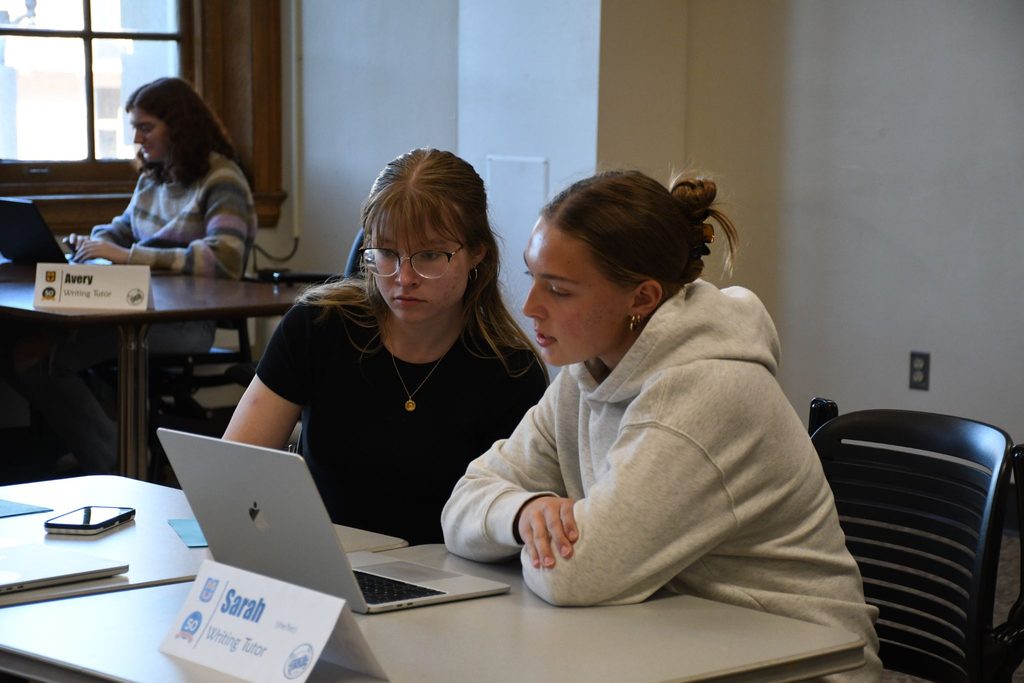
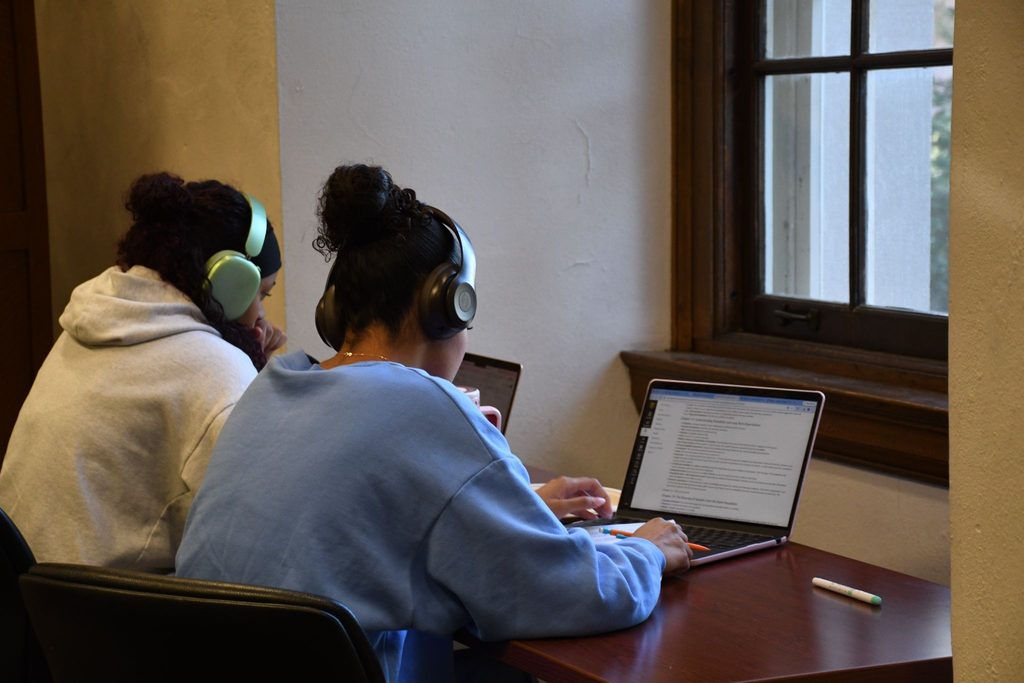
English 1000 students came to Ellis Library to spend some quiet time with their English 1000 drafts. Writing tutors were available to assist with drafts in progress.
Friday’s events:
Graduate Student Lunch & Learn with Dr. Emily Friedman
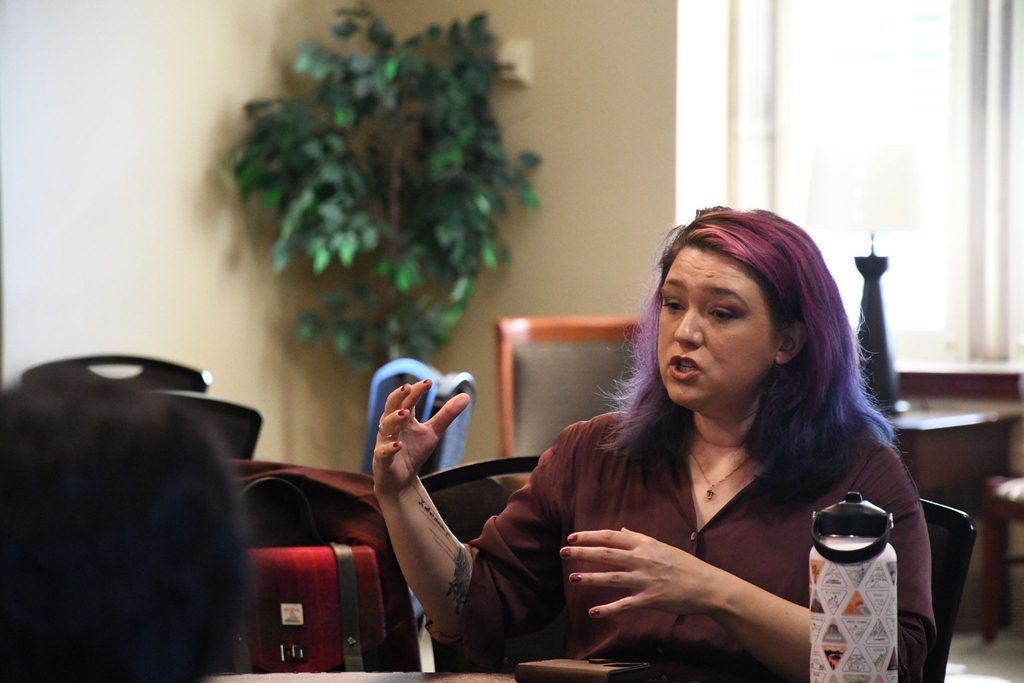
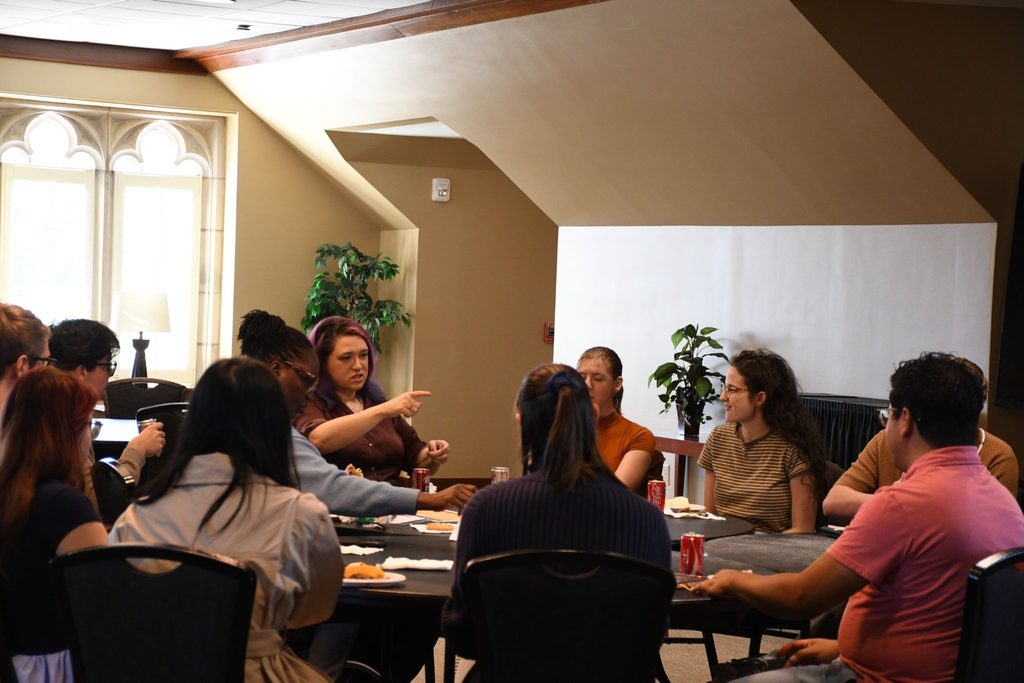
Dr. Emily Friedman met with grad students for an intimate conversation about the writing (and publishing) in academic that happens above the table and what to focus on at the table.
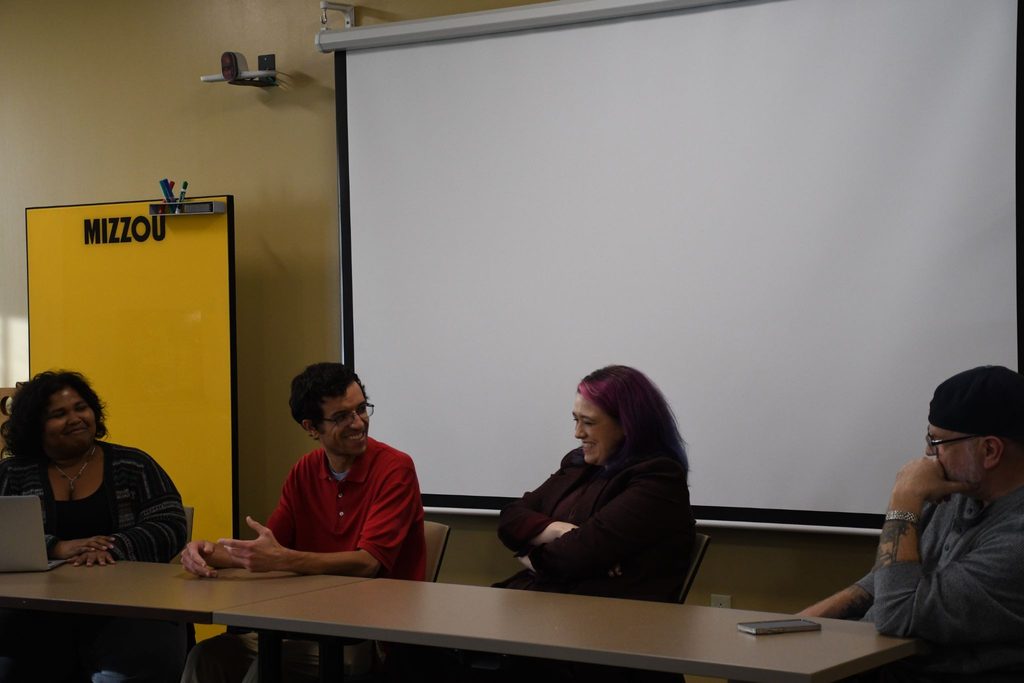
Trade Publishing Panel
This panel featured a diverse spread of professionals, and explores how they have applied, leveraged, deepened, and even challenged the writing skills and techniques developed in the college classroom through their professional careers and personal endeavors.
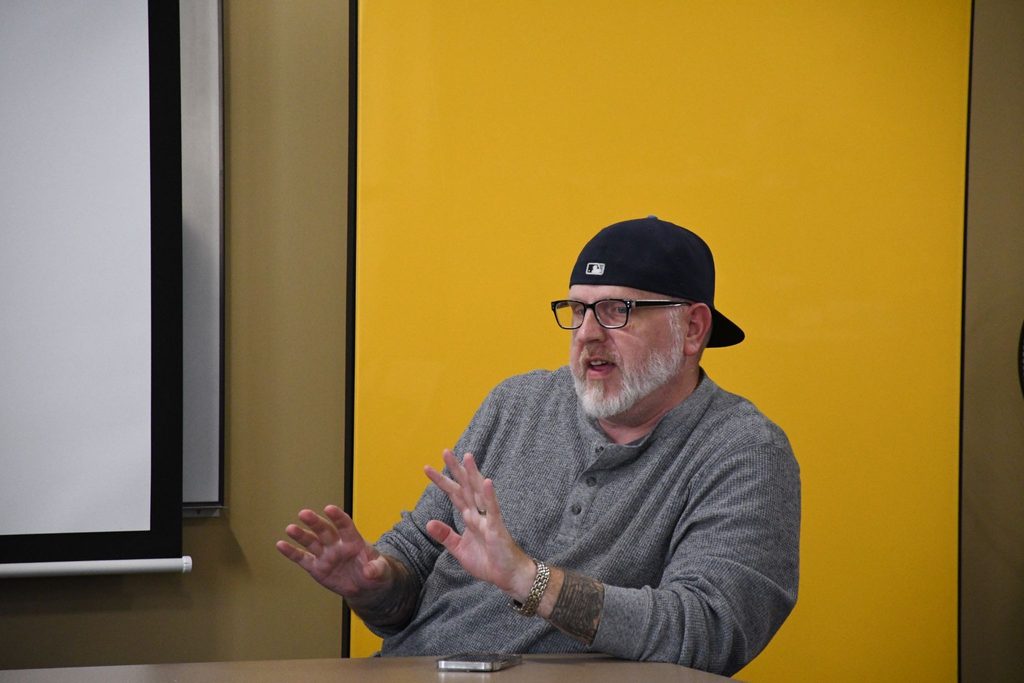
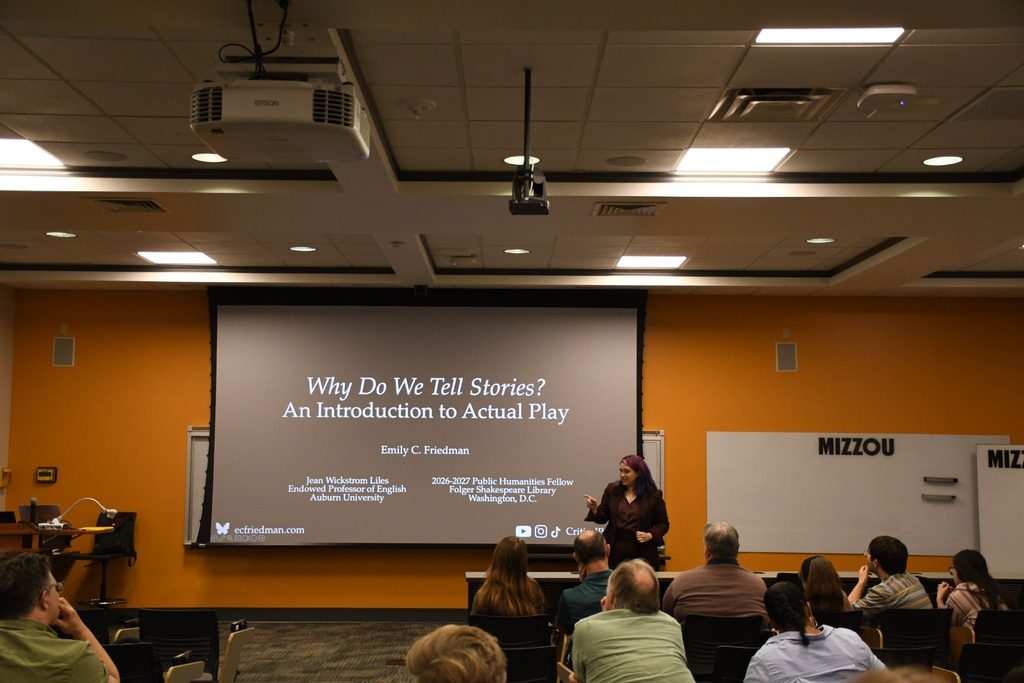
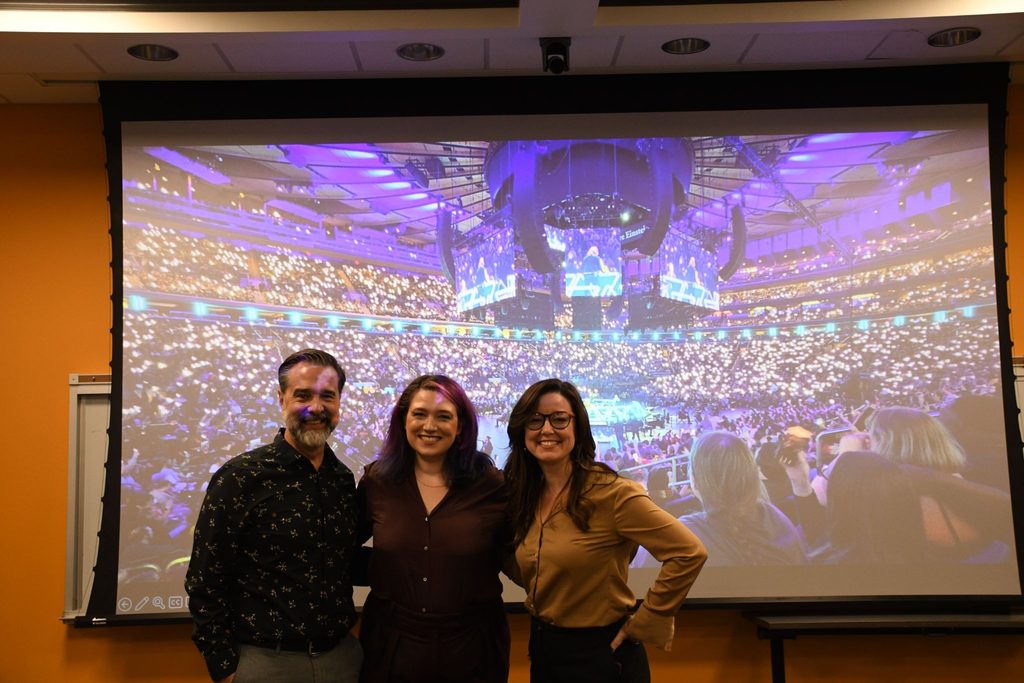
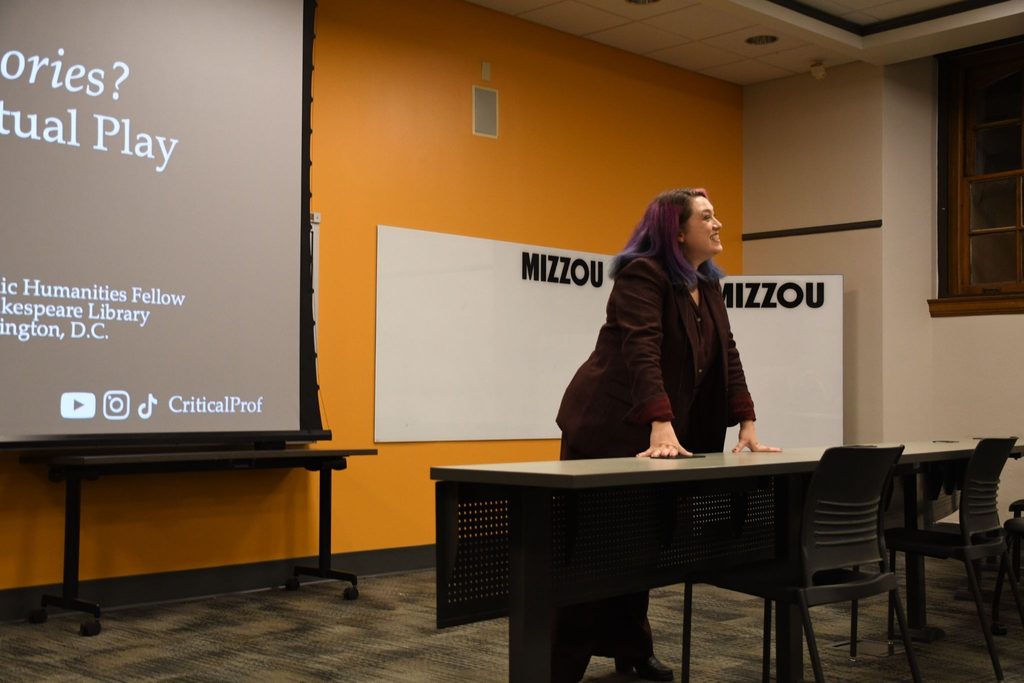
“Why Do We Tell Stories?” A Talk by Dr. Emily Friedman
Dr. Friedman shared a presentation taken from her next book, The Actual History of Actual Play. Actual play features roleplaying games performed in front of live audiences, bringing together global audiences and participants and creating microcelebrities as the stories unfold in real time.