Published on
by Jade Elwess and Elizabeth Barton
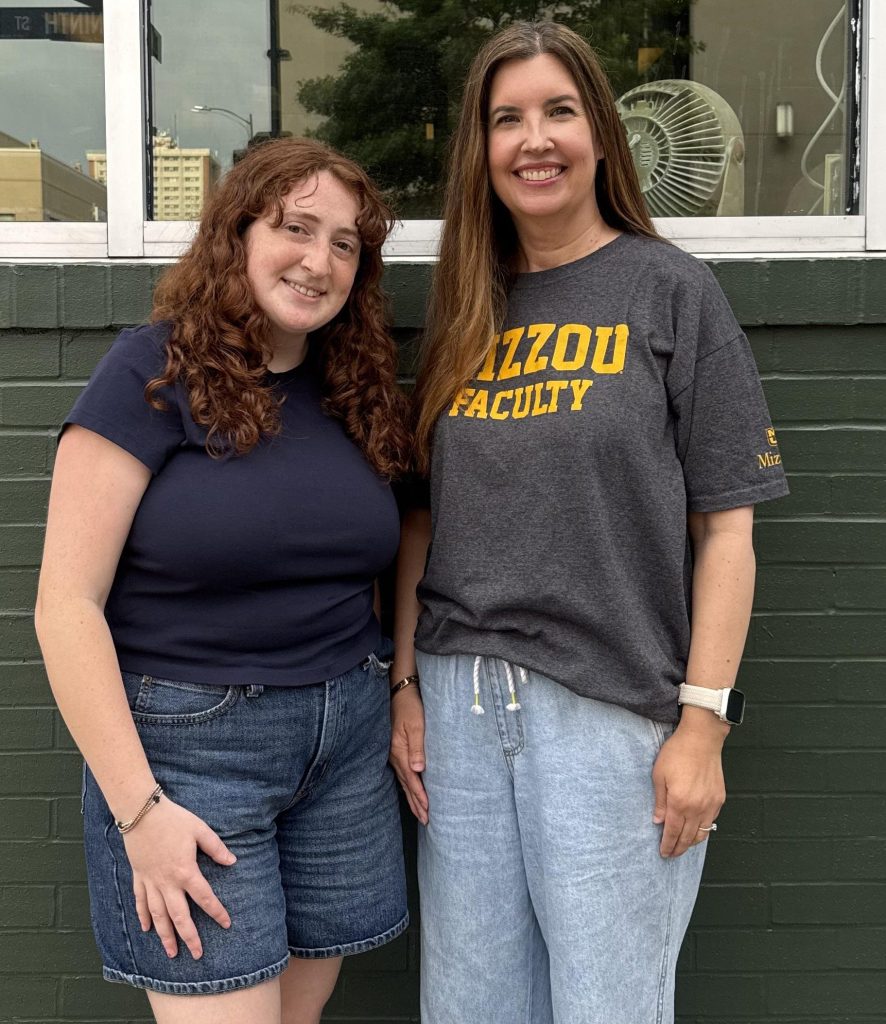
The Summer Research Exposure Program (SREP) through the College of Arts & Science pairs students with faculty mentors for a nine-week program, giving them valuable experience as research assistants.
Nicole Campione-Barr, professor in the Department of Psychological Sciences, directed the SREP this summer and used ForagerOne in the application process.
ForagerOne is a tool that connects students with faculty mentors. Students interested in getting involved in a wide variety of research or creative scholarship or finding a faculty mentor are able to message faculty directly and apply for research opportunities in one place. Faculty can get research assistance on specific projects and recruit qualified students within ForagerOne.“
This year, we linked to ForagerOne directly in the application materials and asked students to search for faculty within Arts & Science whose interests aligned with their own and provide us with up to three names,” Campione-Barr said.
This helped with the mentor matching process and also helped the students explore their interests as they were searching key research terms in ForagerOne.
Elizabeth Behm-Morawitz, professor and chair in the Department of Communication, was one of the faculty mentors in the SREP this year. She found ForagerOne valuable because it helped her connect with a student who was not in her department.
“My experience using ForagerOne has been great so far, connecting me with a strong student that I otherwise would not have met,” Behm-Morawitz said. “ForagerOne allows faculty to work with students beyond their major, resulting in some great interdisciplinary opportunities.”
That was the case when Behm-Morawitz met Avery Copeland, a junior double majoring in journalism and psychology. Copeland was looking for a project that allowed her to step outside her normal activities within her respected majors and do something that combined both.
“I went to see Nicole during her research drop-in hours, and she pointed me to ForagerOne. She showed me how I could search for things that maybe weren’t in the journalism or psychology department but were in other fields. That’s how I found the research in the communication department that I am doing now,” Copeland said.
Copeland’s research focuses on social media, particularly influencer videos across Instagram, TikTok and YouTube, and analyzing which groups of videos receive the most engagement and may be favored by the algorithms, a project which she feels will contribute to a future career in the journalism field.
“Since I am interested in editing and social media audience strategy, it is going to make me well-rounded and help inform what I like to do in the journalism field,” Copeland said.
Research isn’t just test tubes and lab coats, something Copeland says she has learned since beginning her research venture.
“My own research experience has taught me a lot and given me a better understanding of how to work in a research environment,” Copeland said. “I learned that there’s a place for everything in research. You just have to go find it.”
And she credits ForagerOne for helping her find this opportunity.
“It’s a really cool platform that can connect you to experiences you might not have be able to find otherwise.”
Behm-Morawitz will continue to recruit students through ForagerOne and has been impressed with the insights students bring. Their research project introduced Copeland to media research and found an undergraduate research assistant for Behm-Morawitz. Their research proposal has been accepted to be published in a special issue of the American Psychological Association’s journal, Psychology of Popular Media, upon completion in 2027.
Currently, ForagerOne has over 1,200 searchable faculty profiles and has just surpassed 3,000 student profiles.